

Finding Deep Mental Health Support Through Specialized Trauma Therapy in Austin, TX
As a trauma therapist in Austin, TX who has personally survived sexual abuse and eating disorders, I understand the unique mental health journey professional women face when trauma stands between them and their true potential. My practice, True Mind Therapy, offers Austin counseling services and a safe space where successful women can finally address the traumatic experiences that have been holding them back from experiencing true joy, deeper relationships, and spiritual growth.
If you’re a professional woman who has achieved external success but feels something deeper is missing—if you’ve been trying to bury or avoid past traumatic events that are no longer staying buried—you’re not alone. Many of my Austin therapy clients are accomplished women who appear to have it all together on the surface, yet struggle with anxiety, depression, self-doubt, perfectionism, and the feeling that they’re not enough. They know their trauma is blocking them from manifesting their deepest desires for career fulfillment, meaningful relationships, and spiritual connection.
Understanding How Traumatic Events Affect Professional Women’s Mental Health
Trauma doesn’t discriminate based on success or income level. In fact, many high-achieving women have used their drive and accomplishments as a way to cope with unresolved traumatic stress and mental health issues. While this strategy may have worked for years, eventually the unprocessed pain demands attention, often manifesting as anxiety, depression, or other mental health challenges.
Professional women often experience trauma’s impact differently than others might expect. Whether you’ve experienced a single traumatic event or complex trauma from repeated experiences, you may be highly functional in your career while struggling internally with:
PTSD Symptoms and Anxiety: Post-traumatic stress disorder can develop after experiencing traumatic events, creating persistent anxiety, intrusive thoughts, and hypervigilance that interfere with daily life and mental health.
Depression and Emotional Distress: Many trauma survivors experience depression as their nervous system becomes overwhelmed by unprocessed traumatic stress, leading to feelings of numbness, hopelessness, or disconnection.
Perfectionism and Self-Doubt: Traumatic experiences can create a persistent inner voice that says you’re not enough, driving you to overachieve while never feeling truly satisfied with your accomplishments, affecting your overall mental health and well-being.
Complex Trauma Effects: If you experienced repeated traumatic events, especially in childhood, you may be dealing with complex PTSD, which affects emotional regulation, self-worth, and your ability to form healthy relationships.
Difficulty with Intimacy: Past traumatic experiences, especially sexual assault or sexual abuse, can make it challenging to form the deep, authentic relationships you crave. You might find yourself keeping partners at arm’s length or attracting relationships that feel familiar but unfulfilling.
Spiritual Disconnection: Many professional women feel disconnected from their spiritual selves, sensing there’s a deeper power within them but feeling unable to access it fully due to trauma’s interference with their mental health.
My Personal Understanding: Survivor to Therapist
What sets my Austin counseling approach apart is my personal journey as a survivor of sexual abuse and eating disorders. This lived experience allows me to connect with my clients on a deeper level—not just as a therapist, but as someone who has walked this path of treating trauma and found mental health recovery on the other side.
I understand the shame, the self-blame, and the ways traumatic experiences can make you feel broken or different from others. I also know the incredible strength it takes to seek therapy and the transformative power that comes from finally addressing what you’ve been carrying alone for so long.
My journey through my own healing process has given me a unique perspective on how traumatic stress affects the mind, body, and spirit. This combination of clinical training in trauma therapy, personal experience with recovery, and spiritual understanding allows me to create a treatment approach that addresses all aspects of your mental health and well-being.
Specialized Austin Trauma Therapy Approaches for Mental Health
EMDR Therapy: Reprocessing Traumatic Events at the Root
Eye Movement Desensitization and Reprocessing (EMDR therapy) is a powerful, evidence-based approach to trauma counseling that helps your brain process traumatic events in a new way. Unlike traditional therapy approaches, EMDR therapy doesn’t require you to relive every detail of your traumatic experiences. Instead, it allows your brain’s natural healing mechanisms to process stuck memories and reduce traumatic stress.
During EMDR therapy sessions, I guide you through bilateral stimulation—typically eye movements—while you briefly focus on the traumatic event. This process helps your brain file the memory appropriately, reducing its emotional charge and the power it holds over your present mental health and daily life.
Many of my Austin trauma therapy clients find EMDR therapy particularly effective because it works with your body’s natural healing wisdom rather than against it. You don’t need to analyze or understand everything about your traumatic experiences intellectually; you simply need to allow your nervous system to complete the processing it couldn’t do when the trauma originally occurred.
EMDR Intensives: Accelerated Trauma Healing for Busy Professionals
Understanding that professional women often have demanding schedules and prefer focused, efficient treatment for their mental health concerns, I offer EMDR Intensives. These extended therapy sessions allow for deeper, more concentrated trauma healing work than traditional weekly therapy.
EMDR Intensives typically involve 3-6 hour therapy sessions that can accomplish what might take months in traditional weekly trauma counseling. This format is particularly appealing to professional women who want to dive deep into their healing process without the stop-and-start nature of shorter sessions, especially when dealing with PTSD symptoms or complex trauma.
During an intensive therapy session, we can work through multiple aspects of a traumatic event or address several related traumatic experiences in one session. This approach often leads to faster breakthrough moments and more substantial shifts in how you relate to your trauma and manage anxiety and depression.
Adjunct Therapy: Complementary Mental Health Approaches
Recognizing that mental health healing happens on multiple levels, I incorporate adjunct therapy approaches that support and enhance the core EMDR therapy work. These might include:
Body-Based Healing: Helping you reconnect with your body’s wisdom and learn to trust the signals it’s giving you. This is especially important for survivors of sexual assault or sexual abuse who may have disconnected from their physical selves as a protective mechanism against traumatic stress.
Spiritual Integration: For clients drawn to spiritual growth, I weave spiritual practices and perspectives into our trauma counseling work. This isn’t about any particular religion, but rather about helping you reconnect with your inner power and find deeper understanding of your experiences.
Nervous System Regulation: Teaching you practical coping skills to help your nervous system return to a state of safety and calm. This includes breathing techniques, grounding exercises, and other tools you can use between therapy sessions to manage anxiety and PTSD symptoms.
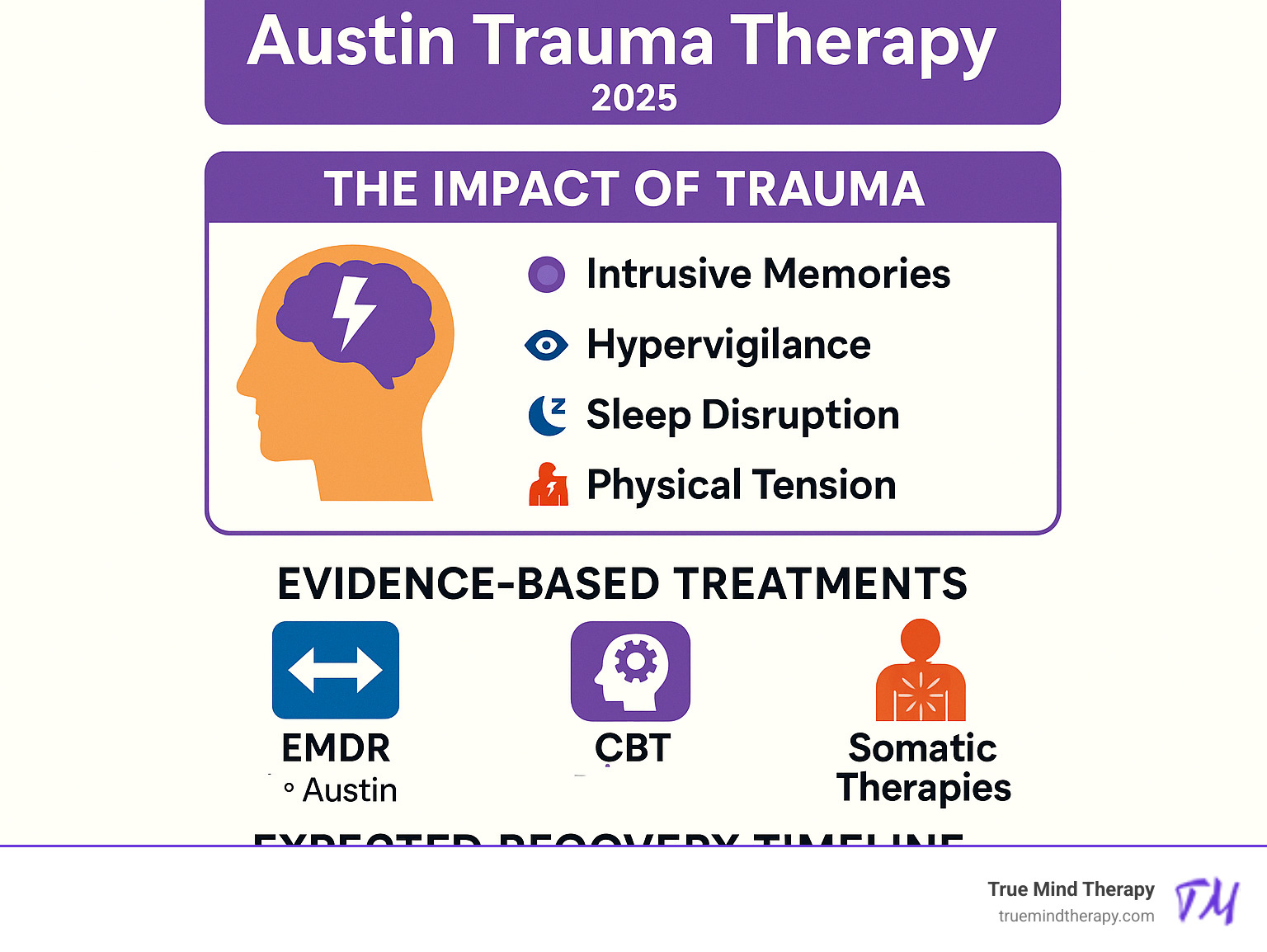
The Healing Process: What to Expect in Austin Trauma Therapy
Initial Assessment and Treatment Planning
My intake process for Austin counseling is designed to be thorough yet comfortable. I’ll send you paperwork to complete beforehand, which takes about 10 minutes. During our first appointment, we’ll conduct a comprehensive assessment where I learn about your history of traumatic experiences, current mental health concerns, and healing goals.
I take special care during this initial therapy session to ensure you feel safe and understood. As a trauma therapist who has experienced traumatic events personally, I know how vulnerable it can feel to share your story, especially for the first time in a therapeutic relationship.
Together, we’ll develop a personalized treatment plan that honors your own pace, your strengths, and your specific mental health goals. There’s no one-size-fits-all approach in my Austin therapy practice; every aspect of your treatment is tailored to your unique needs and circumstances, whether you’re dealing with PTSD, anxiety, depression, or complex trauma.
Building Safety and Stabilization
Before diving into trauma processing, we focus on building a foundation of safety and stabilization in our therapy sessions. This phase is crucial for mental health recovery, especially for women who have experienced sexual assault, sexual abuse, or have been carrying traumatic stress for many years.
During this phase of the healing process, you’ll learn coping skills to help regulate your nervous system, manage difficult emotions like anxiety and depression, and create a sense of safety in your body. We’ll also work on identifying and strengthening your existing mental health resources while developing new ones.
This preparation phase ensures that when we do begin processing traumatic events, you have the internal resources to handle whatever comes up safely and effectively in our trauma counseling work.
Trauma Processing and Integration
Once you’re adequately prepared, we begin the core trauma therapy work, typically using EMDR therapy. This phase involves working through the traumatic experiences that are keeping you stuck, allowing your brain to process and integrate these events in a healthier way that supports your overall mental health.
During trauma processing in our therapy sessions, you might experience a range of emotions and sensations. Some clients describe feeling lighter, as if a weight has been lifted from their mental health burden. Others notice that traumatic events that once triggered severe anxiety or depression become more manageable and less intrusive.
The goal of our Austin trauma therapy isn’t to erase your memories of traumatic experiences, but to change your relationship with them so they no longer control your present mental health or limit your future possibilities.
Reconnection and Empowerment
The final phase of the healing process focuses on reconnection—with yourself, your body, your spirituality, and your relationships. This is where you begin to step into your full power and create the healthier life you’ve always desired, free from the constraints of unprocessed traumatic stress.
Many clients describe this phase as a spiritual awakening or homecoming from their mental health journey. You begin to trust yourself more deeply, make decisions from a place of inner knowing rather than anxiety or fear, and attract relationships and opportunities that align with your authentic self.
Ongoing Support and Availability
Understanding that mental health healing doesn’t happen only during scheduled therapy sessions, I make myself available to my Austin counseling clients between appointments. From 10am to 7pm, you can reach me by phone or email if you have questions about your treatment or need support managing anxiety, depression, or other trauma symptoms that come up.
I typically respond within the same day, and always within 24 hours. This availability is part of your treatment because I know that feeling supported and connected to your trauma therapist can make a significant difference in your healing process and overall mental health recovery.
This doesn’t mean I’m available for lengthy phone sessions, but rather for brief check-ins, clarifications about coping skills we’ve discussed, or support during particularly challenging moments in your mental health journey.

Creating Your Support System for Mental Health Recovery
While I provide individual therapy exclusively in my Austin counseling practice, I encourage my clients to build strong support systems outside of our trauma therapy work together. This might include trusted friends, family members, spiritual communities, or support groups focused on trauma healing and mental health.
Having a solid support network is especially important for professional women who may have learned to handle everything on their own, including managing anxiety, depression, and the effects of traumatic experiences. Learning to receive support and allow others to care for you is often an important part of the recovery process.
I’ll help you identify ways to strengthen existing relationships and create new connections that support your growth, healing process, and mental health recovery. This isn’t about becoming dependent on others, but rather about creating the kind of healthy relationships that allow you to thrive despite past traumatic events.
The Role of Spirituality in Mental Health Healing
Many of my Austin therapy clients are drawn to spiritual growth and see their healing process as part of a larger spiritual path. I welcome this perspective and often find that incorporating spiritual elements enhances the trauma counseling process and supports overall mental health recovery.
This might involve exploring how traumatic experiences have affected your relationship with the divine, working with practices like meditation or prayer to manage anxiety and depression, or simply acknowledging the spiritual dimensions of your healing journey from trauma.
I’m not aligned with any particular religious tradition, but I deeply respect and honor whatever spiritual beliefs and practices are meaningful to you. For many women, reconnecting with their spirituality is an essential part of reclaiming their power and finding their true purpose beyond the limitations of past traumatic stress.
Addressing Sexual Abuse: Specialized Trauma Counseling
Sexual assault and sexual abuse create unique trauma patterns that require specialized understanding and treatment approaches in mental health care. As a trauma therapist and survivor myself, I have both personal and professional insight into how sexual trauma affects women’s relationships with their bodies, their sexuality, their sense of safety, and their ability to trust others.
Sexual abuse often creates deep shame and self-blame that can persist for decades, contributing to ongoing mental health challenges like anxiety, depression, and PTSD symptoms. Many survivors develop a complex relationship with their own power—feeling simultaneously hypervigilant and vulnerable, strong and fragile.
In my Austin trauma therapy work with sexual assault and sexual abuse survivors, I pay special attention to:
Reclaiming Body Autonomy: Helping you develop a healthy, trusting relationship with your own body and learning to honor your physical boundaries and needs as part of your mental health recovery.
Processing Shame and Self-Blame: Working through the false beliefs that sexual abuse often creates in trauma counseling, such as feeling responsible for what happened or believing you’re somehow damaged, which often contribute to anxiety and depression.
Rebuilding Trust: Both in yourself and in your ability to discern safe people and situations. This includes trusting your own intuition and internal warning systems as your mental health improves.
Integrating Sexuality and Spirituality: For many survivors of sexual assault, there’s a split between their spiritual selves and their sexual selves. Trauma healing often involves integrating these aspects of yourself for complete mental health recovery.
Understanding PTSD and Complex PTSD
Post-traumatic stress disorder (PTSD) can develop after experiencing a single traumatic event, while complex PTSD typically results from repeated traumatic experiences, especially in childhood. Both conditions significantly impact mental health and daily functioning.
PTSD symptoms may include:
- Intrusive memories or flashbacks of the traumatic event
- Severe anxiety and panic attacks
- Depression and emotional numbness
- Hypervigilance and feeling constantly on edge
- Avoidance of reminders of traumatic experiences
- Sleep disturbances and nightmares
Complex trauma often involves additional challenges with emotional regulation, self-worth, and relationships. Many of my Austin counseling clients with complex PTSD have spent years managing anxiety and depression without understanding the trauma connection.
Through specialized trauma therapy approaches like EMDR therapy, we can address both PTSD and complex PTSD symptoms, helping you reclaim your mental health and well-being.
Treatment Options: In-Person and Virtual Sessions
I offer both in-person sessions at my Austin, TX location and virtual sessions throughout Texas for those seeking trauma counseling. Many clients appreciate the flexibility of online therapy sessions, especially busy professionals who travel frequently or prefer the privacy of participating from their own space.
EMDR therapy can be effectively conducted through virtual sessions using specialized tools and techniques. Many clients are surprised to find that online EMDR therapy can be just as powerful as in-person sessions for addressing traumatic experiences and improving mental health.
For EMDR Intensives, some clients prefer in-person sessions for the deeper immersion in the healing process, while others appreciate the ability to have longer therapy sessions from the comfort of their home. We’ll discuss what feels right for you based on your preferences, schedule, and mental health treatment goals.
Life Transitions and Trauma Healing
Many professional women seek Austin trauma therapy during major life transitions—career changes, relationship shifts, or periods of personal growth. These transitions can often trigger unresolved traumatic stress, bringing up anxiety, depression, or other mental health concerns that seemed manageable before.
Life transitions offer powerful opportunities for trauma healing and mental health growth. Whether you’re facing a career change, relationship transition, or spiritual awakening, working with a trauma therapist during these pivotal moments can help you navigate change from a place of strength rather than reactive anxiety.
The healing process during life transitions often involves releasing old patterns rooted in traumatic experiences and stepping into new ways of being that support your mental health and authentic self-expression.
The Investment in Your Mental Health
While I don’t provide specific pricing details in this format, I encourage you to reach out directly to discuss investment options and scheduling for trauma counseling services. I believe that quality trauma therapy is one of the most important investments you can make in your mental health and future well-being.
Many of my Austin counseling clients find that the cost of therapy pales in comparison to what they’ve been spending—financially and emotionally—trying to manage anxiety, depression, and traumatic stress through other means. When you consider the impact trauma has on your career, relationships, physical health, and overall mental health, trauma healing work often pays for itself many times over.
I’m happy to discuss payment options and work collaboratively to help you find a way to make this important mental health treatment accessible for your situation.

Ready to Begin Your Mental Health Journey?
If you’re a professional woman ready to reclaim your mental health and move beyond the impact of trauma, True Mind Therapy is here to support your healing journey. Our team understands the courage it takes to seek help—and we’re committed to guiding you toward lasting change and renewed strength.
My Austin trauma therapy approach combines clinical expertise with lived experience, spiritual wisdom with practical coping skills, and individual attention with evidence-based techniques like EMDR therapy. Every aspect of your treatment is designed to honor your unique needs, strengths, and mental health goals.
You don’t have to carry this burden alone anymore. You don’t have to keep trying to bury or avoid what’s asking to be healed. And you definitely don’t have to settle for a life limited by anxiety, depression, or the effects of past traumatic events.
The professional success you’ve already achieved demonstrates your inner strength and resilience. Now it’s time to apply that same tenacity and commitment to your mental health and healing journey. The deeper joy, authentic relationships, spiritual connection, and sense of freedom you’re seeking are all possible through dedicated trauma counseling work.
Your traumatic experiences have been teachers, but they don’t have to define your mental health or future. Through specialized Austin trauma therapy that honors both your professional competence and your healing needs, you can transform your relationship with your past and create the empowered, authentic life you deserve.
I’m here to guide you through this healing process with the understanding, skill, and compassion that comes from having made this mental health journey myself. When you’re ready to take that first brave step toward trauma healing, I’ll be here to provide support every step of the way.
To learn more about my Austin counseling approach or to schedule your first appointment for trauma therapy, please reach out. Your mental health and healing journey is unique, and it’s time to give it the specialized attention it deserves.