

Introduction to Trauma Recovery and Mental Health Healing
Trauma recovery is a deeply personal journey that requires more than just time—it calls for a comprehensive, evidence-based approach with a skilled EMDR therapist to truly heal and move forward. As a trauma therapist in Austin who specializes in Eye Movement Desensitization and Reprocessing (EMDR) therapy, I’ve witnessed the profound transformation that happens when professional women finally address the complex trauma that’s been standing between them and their true potential.
My clinical practice recognizes that you’re not broken—you’re a successful, intelligent woman whose past experiences are simply getting in the way of the joy, deeper relationships, and spiritual growth you’re seeking. I understand this journey intimately because I’m a personal survivor of sexual abuse and eating disorders, which allows me to connect with my clients on a level that goes beyond clinical training alone.
When you’re ready to find an EMDR therapist who truly understands your experience, you need someone with both professional training and lived experience. EMDR therapy has emerged as one of the most effective treatments for addressing trauma, depression, and anxiety, offering hope to those who feel stuck in cycles of self-doubt, perfectionism, or emotional pain. My work focuses specifically on helping professional women ages 25 and up who are ready to dive deep, heal authentically, and reclaim their inner power.
Healing from trauma is rarely a straight path, but with True Mind Therapy and the guidance of a certified EMDR therapist, meaningful and lasting change is within reach. EMDR therapy at True Mind Therapy offers a structured, supportive space to process difficult memories, build effective coping strategies, and reconnect with your most empowered, authentic self.
Understanding EMDR Therapy: A Path to Neural Healing and Mental Health
You might wonder how Eye Movement Desensitization and Reprocessing (EMDR) therapy can help heal deep emotional wounds that have been affecting your success and happiness for years. The science behind EMDR is remarkable, and as an EMDR trained therapist who’s dedicated my practice to this transformative approach, I’m passionate about helping you understand how it works.
When we experience trauma—whether it’s sexual abuse, emotional wounds, or other difficult experiences—our brains don’t always process these memories properly. Think of it like a filing system that gets jammed. Instead of filing traumatic memories away as “things that happened in the past,” they get stuck in an active state that keeps triggering your nervous system, often manifesting as depression, anxiety, self-doubt, perfectionism, or feeling “not enough.”
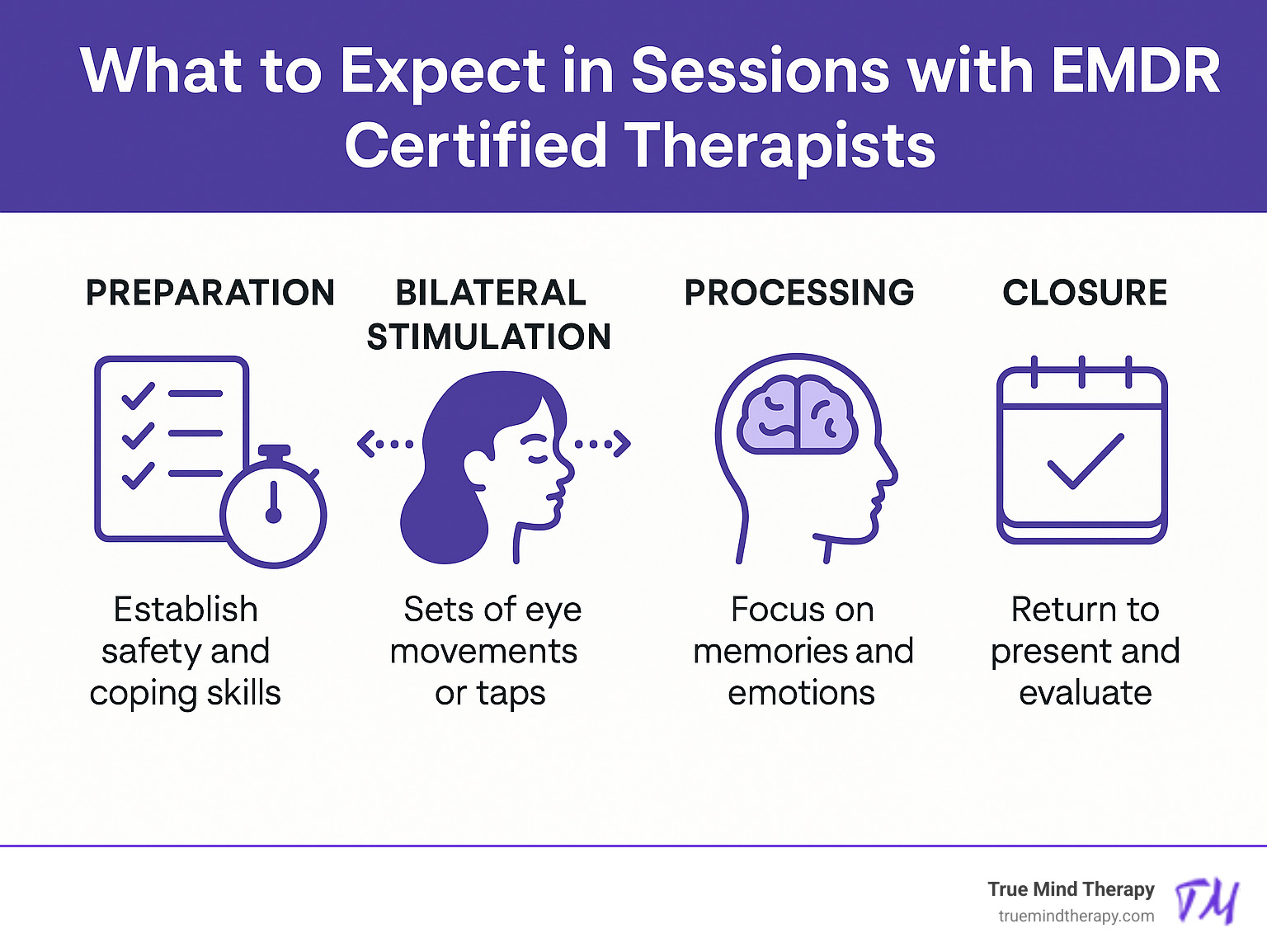
EMDR therapy uses bilateral stimulation through eye movements and other forms of rhythmic stimulation to help unstick these memories. This usually involves following a light or my finger with your eyes as it moves side to side, though I sometimes use sounds in alternating ears or gentle tapping sensations instead. These eye movements and other forms of bilateral stimulation mimic what naturally happens during REM sleep, when our brains sort through experiences and file them away properly.
The approach is built on the understanding that your brain already has an amazing ability to heal itself—trauma just sometimes overwhelms this natural system. As an EMDR therapist with extensive training, I help restart that processing mechanism so traumatic memories can be properly integrated without losing their emotional charge.
Through this reprocessing, something fascinating happens. The factual memory stays intact, but the emotional intensity gets reduced significantly. It’s like the difference between touching a hot stove and calmly remembering that you once touched a hot stove. This allows you to access your inner wisdom and strength without being hijacked by past experiences.
Research shows that EMDR creates measurable changes in brain activity, particularly in areas that get activated by trauma responses. This neuroplasticity—your brain’s ability to form new neural pathways—makes lasting healing possible and helps you develop the deep self-connection and spiritual growth you’re seeking.
The Eight Phases of EMDR: A Comprehensive Treatment Planning Approach
My EMDR therapy follows a careful eight-phase process that keeps treatment both safe and effective. This structured approach to treatment planning is what sets professionally trained EMDR therapists apart and ensures you feel supported throughout your healing journey.
Phase 1: History and Treatment Planning I begin by getting to know your unique story, understanding your current symptoms, and learning about your goals for therapy. This comprehensive treatment planning phase isn’t just about trauma history—I want to understand your spiritual life, your relationships, your career aspirations, and what “thriving” looks like for you personally. As your therapist, I address both your immediate concerns and long-term goals for mental health and emotional well-being.
Phase 2: Preparation Before we process any traumatic memories, I teach you specific coping skills and grounding techniques that become your emotional toolkit. These tools help you manage whatever emotions come up during sessions and in your daily life. As a therapist with personal experience and extensive training, I emphasize practical strategies that actually work when you’re triggered.
Phase 3: Assessment Together, we identify specific traumatic memories that need attention and measure your current distress levels. I also explore the negative beliefs about yourself that trauma has created—things like “I’m not safe,” “I’m not enough,” or “I can’t trust myself.” This phase helps us focus our treatment on the memories and beliefs that are most impacting your present life.
Phase 4: Desensitization This is where the bilateral stimulation through eye movements happens. You’ll focus on the traumatic memory while following eye movements until the emotional distress begins to fade. I check in with you constantly, asking “What are you noticing now?” and adjusting my approach based on how you’re responding.
Phase 5: Installation We strengthen positive beliefs to replace those harsh inner voices. Instead of “I’m not enough,” you might develop a deep knowing that “I am worthy and deserving of love.” This phase is particularly powerful for professional women who struggle with imposter syndrome or perfectionism.
Phase 6: Body Scan I guide you through checking for any lingering physical tension or sensations. Complex trauma often gets stored in the body, so this phase ensures we’ve addressed all aspects of the memory.
Phase 7: Closure Each session ends with grounding techniques to ensure you leave feeling stable and safe. I provide clear guidance on self-care practices and what to do if difficult emotions surface between sessions.
Phase 8: Reevaluation At the start of each new session, we check on your progress and adjust the treatment planning as needed. This ensures we’re always moving toward your goals of deeper spiritual connection, authentic relationships, and personal empowerment.
My Training and Clinical Practice: Combining Expertise with Lived Experience
What sets my clinical practice apart is the unique combination of professional EMDR training, spiritual understanding, and personal experience I bring to trauma recovery. As a therapist who is also a survivor of sexual abuse and eating disorders, I understand the journey from a perspective that goes beyond textbook knowledge.
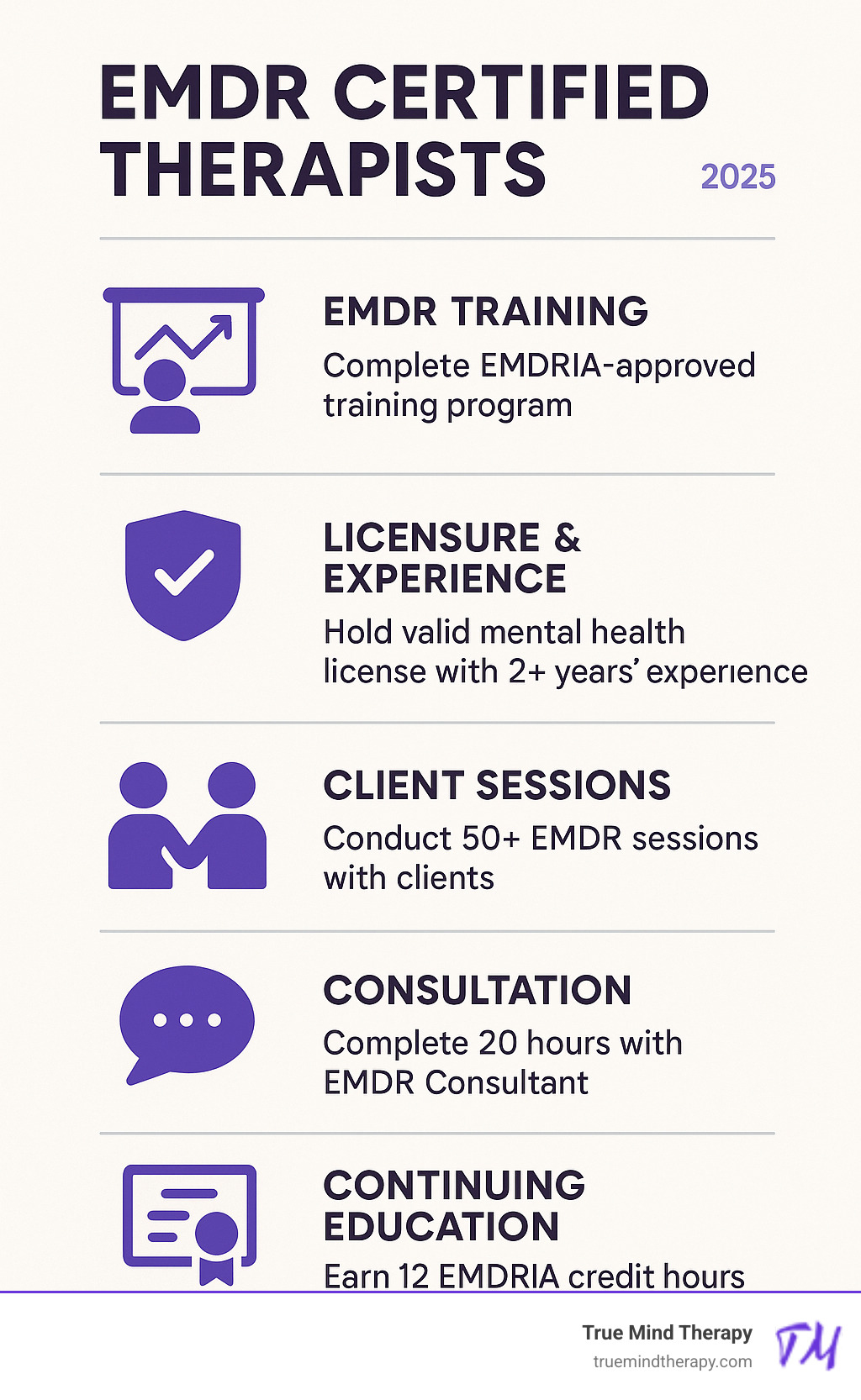
My training as an EMDR therapist includes extensive education in trauma-focused psychotherapy, specialized skills in working with complex trauma, and ongoing consultation to ensure I provide the highest quality care. I’ve developed my skills through rigorous training programs and continue to enhance my abilities through additional training and professional development.
I’ve walked the path of healing trauma that was interfering with my own spiritual growth, relationships, and sense of personal power. This lived experience allows my clients to feel truly seen and understood in ways that create deeper therapeutic connection and faster healing.
My approach recognizes that trauma often gets in the way of the things professional women value most—authentic relationships, spiritual connection, career fulfillment, and the ability to manifest their deepest desires. I’m passionate about helping tenacious, successful women who are ready to stop avoiding their trauma and finally address what’s been holding them back from true joy and inner peace.
In our work together, I combine evidence-based EMDR protocols with spiritual understanding and practical tools for managing your inner critic. I understand that you likely already have some coping skills and a good support system—my role as your therapist is to help you access the deeper healing that allows you to step into your full potential.
Specialized Services I Offer:
EMDR Therapy Sessions: Individual 60-90 minute sessions that allow adequate time for processing work to unfold safely. I create a therapeutic environment where you can explore trauma while learning to respond to difficult emotions with compassion and confidence.
EMDR Intensives: For women who want to accelerate their healing process, I offer intensive therapy formats that concentrate healing work over several days. This approach can be particularly effective for addressing specific traumatic events or breaking through patterns that have been stuck for years.
Adjunct Therapy: Additional therapeutic support that complements your EMDR work, helping you integrate insights and maintain progress between intensive sessions.
Who I Work With: Professional Women Ready for Deep Mental Health Healing
My practice specifically focuses on professional women ages 25 and up who meet certain criteria that indicate readiness for intensive trauma work. You might be a perfect fit if you:
- Are successful in your career but feel like trauma, depression, or anxiety is preventing you from reaching your true potential
- Have tried to bury or avoid difficult experiences, but find that approach isn’t working anymore
- Often doubt yourself, feel indecisive, or struggle with perfectionism and “not enough” thinking
- Want to grow spiritually and form deeper connections with yourself, family, and friends
- Are tenacious and ready to dive deep to truly heal rather than just manage symptoms
- Have a good support system and some existing coping tools but need help with deeper healing
- Are seeking your ideal partner or want to deepen existing relationships but feel blocked by past experiences
- Want to manifest greater career success, freedom, and joy but feel held back by unresolved trauma
I work specifically with women because I understand the unique ways trauma affects our sense of safety, our relationships, and our ability to step into our power. My experience with sexual abuse and eating disorders gives me particular insight into the complex ways these experiences can impact professional success, spiritual growth, and personal relationships.
As your therapist, I understand that mental health concerns often develop as coping mechanisms for deeper trauma. Rather than just treating symptoms of depression or anxiety, I help you address the root causes so you can experience lasting change and develop genuine emotional control.
Treatment Process and What to Expect from Your EMDR Therapist
Initial Contact and Intake When you’re ready to begin, I’ll send you paperwork that takes about 10 minutes to complete. This covers your history, current symptoms, and treatment goals. We then schedule your first appointment for a comprehensive assessment where I get to know your story and we develop your personalized treatment planning approach.
Ongoing Support and Consultation Once we begin working together, I’m available by phone or email during business hours (10am to 7pm) if you have questions or concerns about your treatment. I typically respond within the same day, though always within 24 hours. This between-session support is actually part of your treatment—having access to guidance when you need it helps maintain momentum and manage any difficult emotions that surface.
Session Structure EMDR sessions typically last 60-90 minutes, which is longer than traditional therapy because trauma processing work needs adequate time to unfold safely. I never rush the process or leave you in an activated state at the end of a session.
Personalized Care Approach I don’t believe in one-size-fits-all treatment. Your therapy is tailored specifically to your experiences, your goals, and your unique strengths. Some clients benefit from weekly sessions over several months, while others prefer intensive formats that allow for deeper concentrated work.

The Science Behind EMDR Effectiveness in Mental Health Treatment
EMDR therapy is backed by extensive research showing its effectiveness for trauma recovery, depression, and anxiety. Studies consistently demonstrate that EMDR produces measurable changes in brain activity, particularly in areas responsible for memory processing and emotional regulation.
What makes EMDR particularly effective is its ability to access the brain’s natural healing mechanisms. The bilateral stimulation used in EMDR mimics the rapid eye movements that occur during REM sleep, when our brains naturally process and integrate daily experiences.
This approach allows traumatic memories to be reprocessed and properly stored without losing important information. You don’t forget what happened, but the emotional charge gets significantly reduced, allowing you to access your inner wisdom and strength without being overwhelmed by past experiences.
Research also shows that EMDR can be effective in fewer sessions compared to some other forms of psychotherapy, making it an efficient choice for professional women who want to see meaningful progress without spending years in therapy.
When you search for “find an EMDR therapist” in Austin, you want someone who understands both the science and the personal experience of healing. My training and lived experience help me provide comprehensive care that addresses not just symptoms, but the whole person.
My EMDR Training and Ongoing Professional Development
As an EMDR trained therapist, I’ve completed extensive training that goes beyond basic certification requirements. My education includes specialized training in complex trauma, additional training in working with sexual abuse survivors, and ongoing consultation to ensure I provide the highest quality care.
My training background includes rigorous study of trauma’s impact on the brain, specialized skills in bilateral stimulation techniques, and extensive practice in all eight phases of EMDR therapy. I’ve also completed additional training in integrating spirituality with trauma treatment, recognizing that many of my clients value this holistic approach to healing.
I maintain my skills through ongoing education and consultation with other experienced clinicians in the field. This commitment to continuous learning ensures that I stay current with the latest developments in EMDR therapy and trauma treatment.
When you’re looking to find an EMDR therapist, you want someone who has invested in comprehensive training and continues to develop their skills. My ongoing professional development reflects my commitment to providing you with the most effective treatment possible.
Addressing Common Concerns About EMDR Therapy and Mental Health Treatment
“Will I have to relive traumatic experiences?” While we do focus on traumatic memories during EMDR, you’re not reliving them in the same intense way you originally experienced them. The bilateral stimulation actually helps regulate your nervous system while processing, making it much more manageable than you might expect. As your therapist, I monitor your response constantly and have multiple techniques to help you feel grounded and safe.
“What if I become overwhelmed during a session?” My training and personal experience help me recognize when someone is becoming overwhelmed, and I have multiple techniques to help you feel grounded and safe. We work at your pace, and you remain in control throughout the process. This is particularly important when addressing complex trauma or when clients are also dealing with depression or anxiety.
“How long will therapy take?” This varies greatly depending on your specific situation and goals. Some clients see significant improvement in a few intensive sessions, while others benefit from longer-term work. During our initial assessment and treatment planning phase, I’ll give you a better sense of what to expect based on your unique circumstances.
“Will this interfere with my work or daily responsibilities?” I understand that you have professional obligations and responsibilities. We’ll work together to ensure that therapy enhances rather than disrupts your daily life. Many clients find that as trauma gets resolved, they actually perform better at work and feel more present in their relationships.
“How is EMDR different from other forms of therapy?” EMDR is unique because it directly targets how traumatic memories are stored in your brain. Unlike other forms of therapy that focus primarily on talking through problems, EMDR uses bilateral stimulation to help your brain reprocess stuck memories. This often leads to faster and more lasting results for trauma-related concerns.
Creating Safety in Your Healing Journey with a Trained EMDR Therapist
Safety is paramount in trauma work, and my personal experience as a survivor helps me understand what true safety feels like from the client’s perspective. I create a therapeutic environment where you can explore difficult experiences while maintaining your sense of control and empowerment.
My office in Austin provides a calm, private space where you can do this important work without worrying about being seen or interrupted. For clients who prefer virtual sessions, I help you create a safe space in your own home and ensure you have the support you need during and after processing work.
I also understand that safety isn’t just physical—it’s emotional and spiritual too. Part of my role as your therapist is helping you develop internal resources and coping strategies that you can access whenever you need them, both during therapy and in your daily life.
My training in trauma-focused psychotherapy includes specialized skills in recognizing and managing dissociation, helping clients who feel overwhelmed, and adapting my approach for different types of complex trauma. These skills ensure that our work together remains safe and productive throughout your healing journey.
Integration and Long-Term Mental Health Growth
EMDR therapy isn’t just about processing traumatic memories—it’s about helping you integrate new insights and strengths into your daily life. As we work together, you’ll likely notice changes in how you respond to stress, how you relate to others, and how you connect with your own inner wisdom.
Many of my clients find that as trauma gets resolved, they naturally become more spiritually connected, more confident in their decisions, and more able to manifest the relationships and career success they desire. This isn’t because I’m teaching you new skills, but because removing the blocks allows your natural gifts and intuition to emerge more fully.
I also help you develop practices and strategies for maintaining your progress after formal therapy ends. This might include mindfulness techniques, ways to strengthen your spiritual connection, or methods for continuing to respond to your inner critic with compassion.
The goal isn’t just symptom relief from depression or anxiety, but genuine transformation that helps you step into your full potential as a woman, professional, and spiritual being.
Why Choose an Experienced EMDR Therapist for Your Healing Journey
When you search for “find an EMDR therapist” in Austin, you’ll discover many options. What sets my practice apart is the combination of specialized training, lived experience, and focus on helping professional women achieve deep, lasting transformation.
As an EMDR trained therapist with extensive experience in complex trauma, I understand both the clinical aspects of healing and the personal journey of recovery. My own experience as a survivor of sexual abuse and eating disorders allows me to connect with clients in ways that create deeper therapeutic relationships and accelerate healing.
My clinical practice is specifically designed for women who are ready to move beyond just managing symptoms of depression, anxiety, or trauma responses. I work with clients who want to address root causes, develop authentic spiritual connections, and step into their full power as successful, empowered women.
The training and skills I’ve developed through years of education and practice in EMDR therapy mean that I can help you navigate even complex trauma with safety and effectiveness. My approach combines evidence-based treatment with spiritual understanding and practical tools for lasting change.
Taking the Next Step in Your Mental Health Journey
If you’re tired of letting past trauma dictate your present happiness and future possibilities, EMDR therapy might be the key to the deeper healing you’ve been seeking. As someone who has walked this path personally and professionally, I understand both the courage it takes to face difficult experiences and the incredible freedom that comes from truly healing.
My practice focuses specifically on helping professional women who are ready to stop surviving and start thriving. If you’re tenacious, spiritually-minded, and ready to dive deep into your healing journey, I’d be honored to support you in reclaiming your inner power and stepping into the joy and success you deserve.
The path to healing trauma doesn’t have to be walked alone. With the right therapeutic support from a trained EMDR therapist, your past experiences can become sources of strength rather than sources of pain. When you’re ready to find an EMDR therapist who truly understands your journey, contact me today to learn more about how EMDR therapy can help you move beyond trauma and into the abundant, connected life you’re meant to live.
Ready to Begin Your Healing Journey with an Experienced EMDR Therapist?
Healing is not only possible—it’s within your reach. If you’re ready to address the trauma, depression, or anxiety that’s been holding you back from true joy, spiritual growth, and deep relationships, I invite you to reach out. Contact True Mind Therapy today to learn more about my EMDR therapy services and how we can work together to help you reclaim your inner power and step into your full potential.
For more information about scheduling, treatment options, and what to expect in our work together, please reach out directly. Your journey toward deep healing and authentic empowerment starts with a single step—and I’m here to support you every step of the way as your dedicated EMDR therapist in Austin.