

When traumatic memories get stuck in our minds, they often feel like wounds that never quite heal. As an EMDR therapist in Austin specializing in trauma treatment, I’ve seen how unprocessed traumatic experiences can continue affecting successful women years or even decades after traumatic events occurred. The good news? Eye movement desensitization and reprocessing (EMDR) therapy offers a powerful approach that can help your brain finally process what happened and move toward genuine healing.
Understanding How Trauma Gets Stuck
Think of your brain like a sophisticated filing system. When everything’s working smoothly, you process experiences and store them neatly away. But psychological trauma can severely disrupt this system – leaving painful memories “frozen” in time, complete with all the original emotions, physical sensations, and negative thoughts about yourself. At True Mind Therapy, we understand how these unprocessed memories can continue to cause distress long after the traumatic event has passed.
These unprocessed traumatic memories don’t just sit quietly. They can be triggered by current events, making you react as if you’re experiencing the disturbing event all over again. This is why trauma can feel so present and overwhelming, even years later. You might find yourself:
- Experiencing symptoms of post-traumatic stress disorder (PTSD)
- Feeling stuck in patterns that don’t serve you
- Struggling with self-doubt or perfectionism
- Having difficulty forming deep connections
- Sensing that something is holding you back from your true potential
- Experiencing anxiety or mood fluctuations that seem to come out of nowhere
As someone who has personally walked the healing journey from sexual abuse and eating disorders, I understand these struggles intimately. This firsthand experience with past trauma, combined with my professional training, allows me to create a uniquely safe and effective trauma treatment space.
What Is EMDR Therapy?
Eye movement desensitization and reprocessing (EMDR) therapy stands as one of the most researched and effective treatments for psychological trauma. Developed by Dr. Francine Shapiro in 1987, EMDR therapy works with your brain’s natural healing abilities through the Adaptive Information Processing model.
At its core, EMDR therapy helps “unfreeze” traumatic memories and integrate them into your normal memory networks. The facts of what happened remain, but the negative emotions and traumatic stress fade away, allowing you to finally move forward.
The Science Behind EMDR Treatment
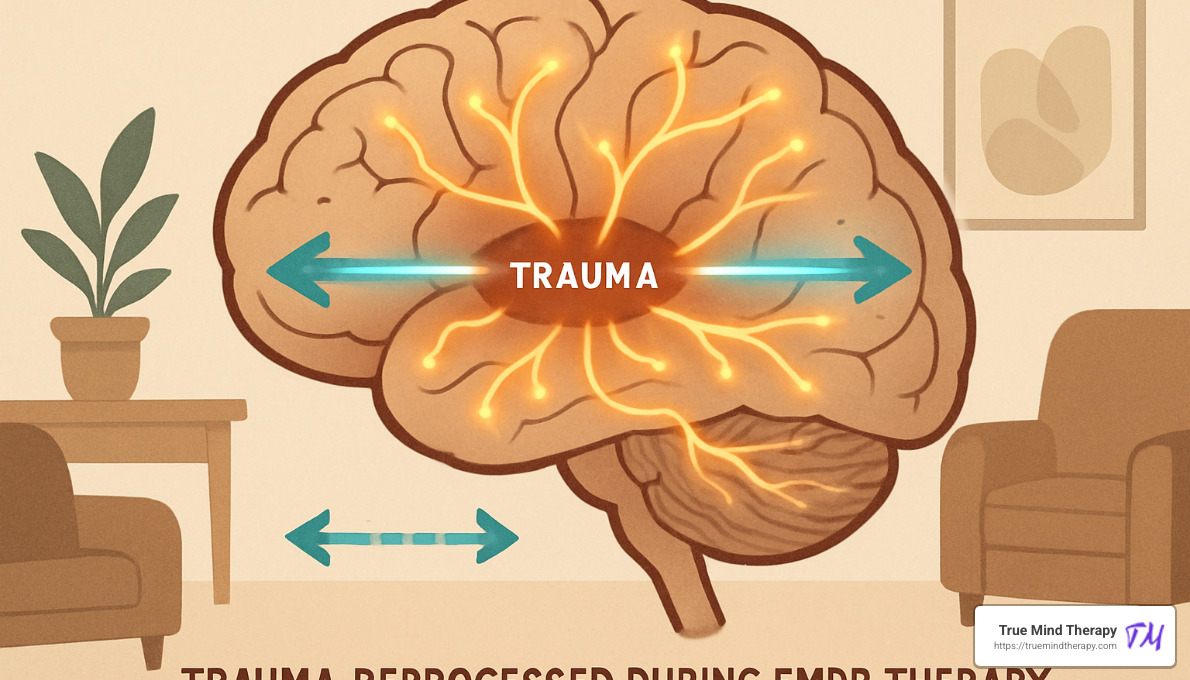
EMDR therapy taps into biological mechanisms involved in memory processing, similar to those activated during REM sleep—when your brain naturally processes emotional experiences. Through bilateral stimulation (typically guided eye movements, gentle taps, or alternating tones) while briefly focusing on traumatic memories, EMDR helps your brain reprocess experiences that have remained frozen in time.
Scientists have proposed several compelling theories about why eye movement desensitization and reprocessing works so effectively:
Working Memory Theory: When you focus on a traumatic memory while simultaneously engaging in bilateral stimulation, your working memory gets divided. This “dual-attention” makes it harder to maintain the vivid, emotional quality of the disturbing memory, potentially allowing it to be stored in a less distressing form.
REM-Like Processing Theory: The eye movements in EMDR resemble those in REM sleep—when our brains naturally process emotional experiences. EMDR may activate similar neurobiological mechanisms, essentially helping your brain do what it naturally does during sleep.
Interhemispheric Communication Theory: Bilateral stimulation may improve communication between your brain’s hemispheres. Traumatic memories often involve primarily right-hemisphere emotional processing with limited left-hemisphere logical processing. EMDR might help bridge this gap.
The World Health Organization and the American Psychiatric Association have recognized EMDR therapy as an effective treatment for PTSD and other mental health conditions related to traumatic experiences.
The EMDR Therapeutic Process: A Journey to Healing
The EMDR practice follows a thoughtful, structured eight-phase approach that ensures you’re properly prepared and supported throughout your healing journey:
1. History-Taking and Treatment Planning
Our first EMDR sessions focus on getting to know your unique story. I’ll listen carefully as you share your history, identifying past experiences that might be causing current difficulties, present situations that trigger distress, and the skills you’ll need for future wellbeing. This conversation helps me as your EMDR therapist identify the targeted memories we’ll work on.
2. Preparation
Before diving into processing work, I ensure you have the emotional tools you need. Unlike talk therapy that focuses primarily on verbal processing, EMDR therapy requires specific preparation. We’ll build trust and develop practical self-calming techniques like the “Safe/Calm Place” exercise—tools you can use both in and between sessions when emotional trauma feels overwhelming.
3. Assessment
Together, we identify specific traumatic memories to process, exploring:
- A vivid image representing the disturbing event
- The negative thoughts you hold about yourself because of this experience
- A positive belief you’d prefer to hold instead
- The emotions and body sensations connected to the traumatic memory
4. Desensitization
This is where eye movements or other forms of bilateral stimulation happen. You’ll briefly focus on the targeted memory while following my fingers with your eyes, listening to alternating tones, or feeling gentle taps. After each set, you simply notice whatever comes up—thoughts, feelings, physical sensations, or even nothing at all.
Internal associations arise naturally during this process as your brain makes connections between different aspects of your experience. This phase continues until the distress level from the traumatic memory decreases significantly.
5. Installation
Once the memory feels less disturbing, we strengthen the positive belief you identified earlier. With continued bilateral stimulation, you’ll pair the memory with this new perspective until the positive belief feels completely true to you. This is a critical component of successful EMDR therapy.
6. Body Scan
Our bodies often hold onto traumatic stress in physical ways we don’t realize. In this phase, you’ll mentally scan your body while thinking of both the targeted memory and your positive belief, noticing and processing any remaining tension or body sensations.
7. Closure
Every EMDR session ends with ensuring you feel grounded and stable. If processing is incomplete (which is common—healing from traumatic memories takes time), I’ll guide you through containment exercises and remind you of self-calming techniques. Unlike extended exposure therapies, I never leave you hanging with activated trauma.
8. Reevaluation
At the beginning of your next session, we’ll check in on the previous targeted memory. Has the distress level stayed down? Has the positive belief remained strong? These insights clients gain help guide where we go next in your EMDR treatment.

Who Benefits Most from EMDR Therapy?
EMDR therapy’s effectiveness shines brightest with several mental health conditions and experiences:
Treating PTSD and Acute Stress Disorder
The evidence for treating posttraumatic stress disorder is particularly compelling—84-90% of single-trauma victims no longer qualify for a PTSD diagnosis after just three 90-minute EMDR sessions. For multiple trauma victims carrying complex histories, studies show 77% found freedom from PTSD symptoms after more comprehensive treatment.
Anxiety Disorders
Whether you’re dealing with panic attacks that seem to come from nowhere, social anxiety that limits your connections, or the constant worry of generalized anxiety disorder, EMDR therapy offers a path forward by processing the traumatic experiences that fuel these fears.
Depression and Negative Emotions
Depression often has roots in painful events and negative thoughts about yourself. By addressing these memories and changing the negative beliefs they’ve created, my clients report significant improvements in emotional health after successful EMDR therapy.
Sexual Abuse Recovery
As a survivor myself, I bring both professional expertise and personal understanding to this delicate healing work. EMDR therapy provides a gentle yet powerful approach to processing sexual trauma without requiring detailed retelling of your experiences.
Compulsive Behaviors
For those struggling with compulsive behaviors or addictions, EMDR offers a unique psychotherapy treatment approach. Rather than just addressing the behavior, it helps heal the underlying wounds that drive the need to self-medicate or escape.
EMDR Intensives: Accelerated Healing for Busy Professional Women
In addition to traditional weekly EMDR sessions, I offer EMDR Intensives—a concentrated form of reprocessing therapy that can accelerate your healing journey. These extended sessions (typically 3-5 hours) allow for deeper, more continuous processing than standard hour-long appointments.
EMDR Intensives are especially beneficial for:
- Professional women with demanding schedules who find it difficult to commit to weekly therapy
- Those who prefer to work through trauma in a concentrated timeframe rather than stretching the process over months
- Clients who feel ready to dive deeper into their healing work
- Women seeking breakthrough experiences to overcome specific traumatic memories or blocks
What Makes My EMDR Practice Different
As both a clinical therapist and a personal survivor of sexual abuse and eating disorders, I bring a unique dual perspective to our work together. This combination allows me to:
- Create a space where you truly feel seen, understood, and safe
- Guide you with both professional expertise and authentic empathy
- Help you connect with your innate spirituality and wisdom as part of your healing
- Support you in transforming trauma memory into personal power
My clients often tell me they chose to work with me precisely because of this integration of clinical skills, spiritual awareness, and lived experience with emotional trauma. They sense that I truly “get it” in a way that creates deeper trust and faster progress.
Common Questions About EMDR Therapy
Does EMDR require me to relive my trauma in detail?
No—and this is one of the most significant benefits of EMDR therapy. Unlike talk therapy or other trauma-focused approaches that ask you to repeatedly recount your experiences, EMDR takes a gentler approach. You’ll briefly focus on aspects of the upsetting memories while engaging in bilateral stimulation, without needing to verbalize everything that happened.
The World Health Organization notes that unlike some other approaches, EMDR therapy doesn’t involve “detailed descriptions of the event, direct challenging of beliefs, extended exposure, or homework,” making it accessible to people who might find those aspects of other therapies difficult.
How many sessions does EMDR usually take?
The honest answer is that it varies based on your unique situation, but I can give you some helpful guidelines:
For single-incident trauma (like a car accident or single assault), research shows impressive results in a relatively short time. About 84-90% of trauma victims no longer meet criteria for a PTSD diagnosis after just three 90-minute EMDR sessions.
For complex or multiple traumas, the journey usually takes longer—often 8-12 EMDR sessions or more. We’ll address each traumatic memory systematically, working at a pace that feels right for you.
Can EMDR be done online?
Absolutely. I offer both in-person sessions in my Austin office and secure online EMDR therapy. Many clients actually prefer online sessions, finding them more convenient while still effective. The Veterans Affairs healthcare system has even endorsed remote delivery of EMDR therapy in certain circumstances, recognizing its effectiveness in various formats.
Is EMDR therapy right for me?
EMDR therapy is particularly well-suited for professional women who:
- Are experiencing symptoms of post-traumatic stress or other mental health conditions
- Are ready to address trauma that’s holding them back from their true potential
- Have tried traditional talk therapy but still feel stuck
- Desire deep transformation rather than just symptom management
- Prefer not to discuss their trauma in exhaustive detail
- Are spiritually-oriented and value holistic healing approaches
The best way to determine if EMDR is right for you is through a consultation where we can discuss your specific situation and goals.
Your Healing Journey: The Path Forward
The journey of healing from psychological trauma is deeply personal, and I honor that journey with evidence-based psychotherapy treatment like EMDR while integrating spiritual awareness and my own lived experience of healing.
When traumatic memories get locked in our brains, it can feel like being trapped in a maze with no exit. Eye movement desensitization and reprocessing helps create that exit by tapping into your brain’s natural healing abilities. Through this emotional process, those painful events transform—the facts stay intact, but the traumatic stress fades away, allowing you to finally move forward.
The women I work with in Austin often experience remarkable changes through the EMDR therapeutic process. People who once felt defined by their trauma discover a newfound sense of freedom. Their traumatic experiences become just that—past experiences, not ongoing emotional emergencies.
You don’t have to continue carrying the full weight of traumatic events. That burden was never meant to be permanent. With the right EMDR therapist and therapeutic approach, healing isn’t just possible—it’s what you deserve.
If something in this article resonated with you, I invite you to reach out. As a specialist in eye movement desensitization and reprocessing who has walked this path personally, I’m dedicated to helping you reclaim your inner power and create the joyful, connected life you desire. Together, we can transform emotional wounds into sources of strength, wisdom, and authentic connection.
Contact me to schedule a consultation and take the first step on your healing journey with EMDR therapy in Austin.